
This Week’s Tip: Use Camel Case Hashtags
Did you know?
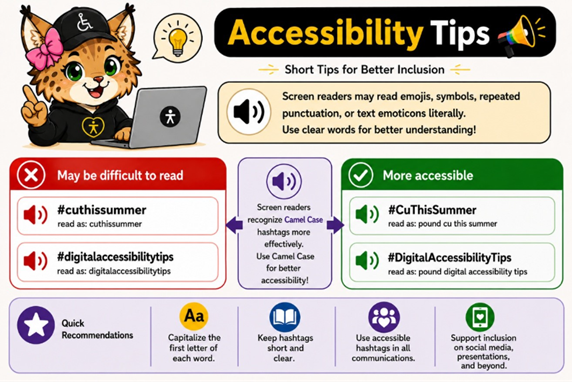
Hashtags written in all lowercase can be more difficult for screen readers and some users to understand. Using capital letters at the beginning of each word, also known as Camel Case, improves readability and accessibility.
Quick Recommendations
✔ Capitalize the first letter of each word in hashtags
✔ Keep hashtags short and clear when possible
✔ Avoid long strings of words without spacing cues
✔ Use accessible hashtags on social media, presentations, newsletters, and digital communications
Why It Matters
Camel Case hashtags support:
- Better screen reader pronunciation
- Easier reading for everyone
- Improved readability for users with dyslexia or cognitive disabilities
- More inclusive digital communication practices
Interested in learning more about digital accessibility or scheduling a consultation?
Contact Rosanna Miiller Salas at: rosanna.miillersalas@ucdenver.edu
Small changes can create more inclusive digital experiences for everyone.